


Bathroom Extractor Fans: How to Choose the Right One for Your South African Home
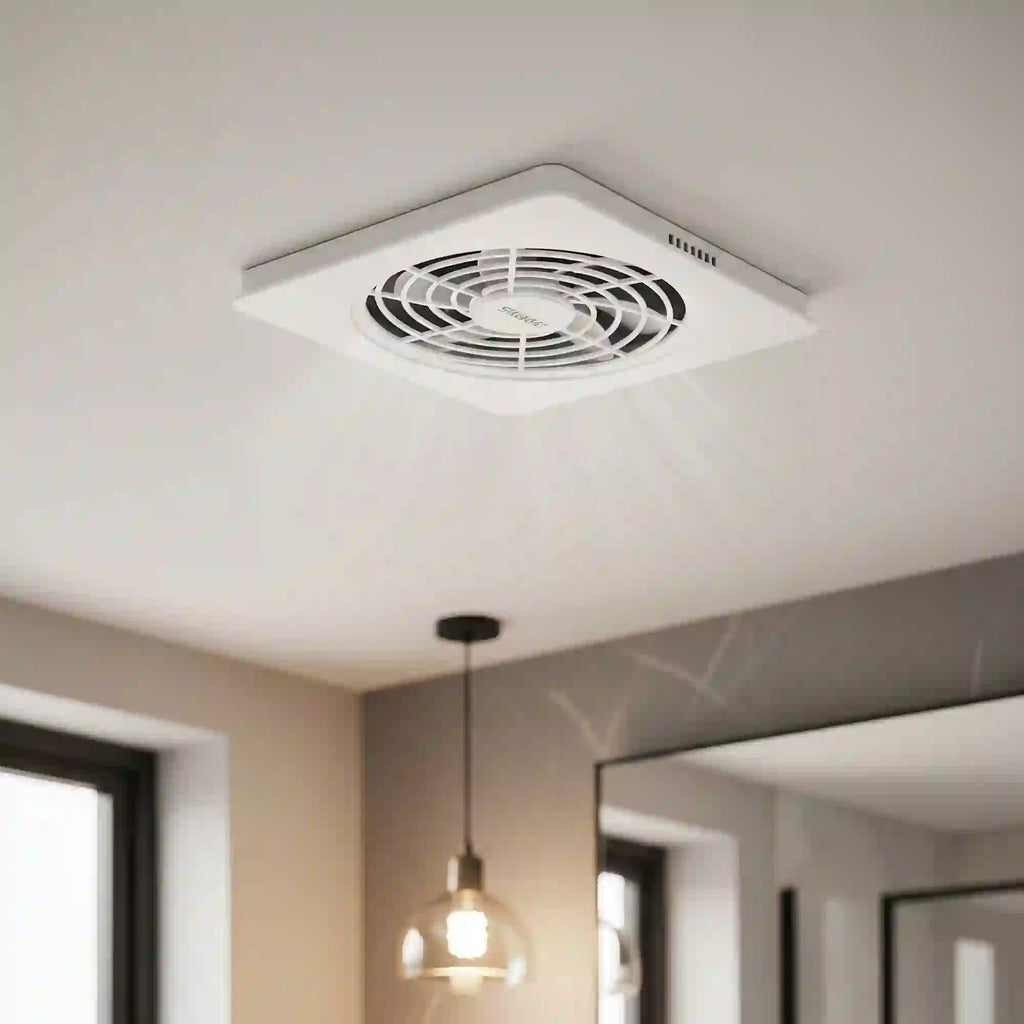
A good bathroom extractor fan is one of those quietly essential fittings that most people only think about when it is missing. Steam clings to the mirror, paintwork starts to peel, grout darkens with mold and the room never quite feels fresh. The right extractor fan solves all of that in the background, pulling damp air out before it can settle into your walls and ceilings. This guide explains how bathroom extractor fans work, the different types available, and exactly how to choose one that suits your South African home.
Why your bathroom needs an extractor fan
Bathrooms generate an enormous amount of moisture. A single hot shower releases litres of water vapour into the air, and without somewhere to go that moisture condenses on every cool surface: windows, tiles, mirrors and ceilings. Over time, trapped humidity leads to peeling paint, swollen cabinetry, musty smells and black mold in the grout lines. Beyond the cosmetic damage, persistent damp is bad for indoor air quality and can aggravate allergies and respiratory problems.
An extractor fan removes that humid air at the source and vents it outside, replacing it with drier air from the rest of the home. This is the principle of mechanical ventilation, and in a room as moisture-heavy as a bathroom it is the single most effective way to protect your finishes and keep the space healthy. In many newer South African homes a bathroom extractor fan is now considered standard, particularly in internal bathrooms with no opening window.
How a bathroom extractor fan works
The concept is simple. A motor spins a fan that draws moist air into a duct and pushes it out of the building, usually through an external wall or up through the roof void. Fresh, drier air is drawn in under the door or through a vent to take its place. The result is a steady turnover of air that keeps relative humidity low enough that condensation cannot form.
The most important number to understand is the extraction rate, measured in cubic metres per hour (m3/h) or litres per second (l/s). This tells you how much air the fan can move. Too weak and the fan will struggle to clear the steam; correctly sized and it will keep the room dry without running for hours.
Types of bathroom extractor fan
Axial fans (wall and ceiling mounted)
Axial fans are the most common type for domestic bathrooms. They mount directly on an external wall or ceiling and vent through a short duct to the outside. They are affordable, easy to install and ideal where the fan sits close to an outside wall. A ceiling extractor fan is the neat choice when you want the unit out of sight overhead, while a wall-mounted version suits bathrooms with a convenient external wall.
Inline (centrifugal) fans
Inline fans sit within the ducting itself, often hidden in the roof void, and pull air through longer runs of pipe. Because they generate more pressure, they are the right answer for internal bathrooms set far from an external wall, or where a single fan needs to serve a shower enclosure some distance from the vent. They are quieter at the grille because the motor is mounted away from the room.
Extractor fans with light
A combined extractor fan with light unit handles ventilation and illumination in one ceiling fitting, which is useful in compact bathrooms and shower cubicles where space and wiring points are limited. If you are already planning your lighting scheme, it is worth considering how ventilation fits in alongside it.
How to choose the right extractor fan
Size it to your bathroom
The fan must be powerful enough for the volume of the room. As a rule of thumb, calculate the room volume (length x width x height in metres) and aim for a fan that turns the air over at least seven to eight times per hour. For a typical small bathroom that points to an extraction rate of around 80 to 100 m3/h, while larger family bathrooms or rooms with a separate shower will need more. Choosing a slightly stronger fan than the minimum is always wiser than under-specifying.
Look at the noise level
Nobody wants a fan that sounds like a jet taking off. Noise is measured in decibels (dB), and a silent or quiet bathroom extractor fan will typically sit around 25 to 35 dB. If your bathroom adjoins a bedroom, or you simply value a calm space, a low-noise model is well worth the small premium. Inline fans are inherently quieter in the room because the motor is tucked away in the duct.
Check the safety rating
Bathrooms are divided into electrical safety zones based on proximity to water, and any fan installed near a shower or bath must carry an appropriate IP rating for protection against moisture. A unit rated IP44 or higher is suitable for most bathroom positions, and a qualified electrician should always confirm the correct zone and wiring for your installation.
Consider the extra features
Modern fans offer features that make life easier. A timer keeps the fan running for a set period after you leave, clearing residual steam. A humidity sensor switches the fan on automatically when moisture in the air rises, which is ideal for busy family bathrooms. Some models add a pull cord, a back-draught shutter to stop cold air flowing back in, or trickle ventilation for constant low-level airflow.
Installation and placement
Placement matters as much as the fan itself. For best results the extractor should sit as far as possible from the source of fresh air (usually the door) so that air is drawn across the whole room, and as close as possible to the shower or bath where steam is heaviest. The duct run to the outside should be kept short and as straight as you can manage, since every bend reduces airflow. Ducting should always vent to the exterior, never into a roof void, where expelled moisture would simply cause damp elsewhere. Installation involves mains wiring, so it is a job for a registered electrician.
Beyond the fan: managing bathroom moisture
An extractor fan does the heavy lifting, but a few companion choices help keep humidity under control. A demister LED mirror stays clear even in a steamy room, so you are not constantly wiping it down. A heated towel rail dries towels quickly and adds gentle warmth that discourages damp from lingering. Containing the steam at source helps too: a well-sealed shower screen or enclosure stops spray and vapour spreading across the room. For more on keeping the wettest part of your bathroom under control, see our complete guide to choosing shower doors, and our bathroom mirror guide covers demister and anti-fog options in detail.
Hard-wearing, moisture-resistant surfaces round out the picture. Porcelain and ceramic bathroom tiles shrug off humidity far better than painted plaster, and the right bathroom accessories in finishes built for damp environments will keep their looks for years.
Find the right extractor fan at Bella Bathrooms
A quiet, correctly sized extractor fan protects your bathroom, your finishes and your health for years, all for a modest outlay. Browse the full range of bathroom extractor fans at Bella Bathrooms, from compact ceiling units to powerful inline models, and choose a fan matched to your room size and layout. If you are not sure which extraction rate or style suits your space, our team is always happy to help you get the specification right. Visit our Kramerville showroom or explore the bathroom extractor fan collection online to get started.






Want extractor my bathroom is closed with glass doors need to know how big is the pipe leading out