Shower Floor Tiles: How to Choose the Right Tile, Size and Slip Rating
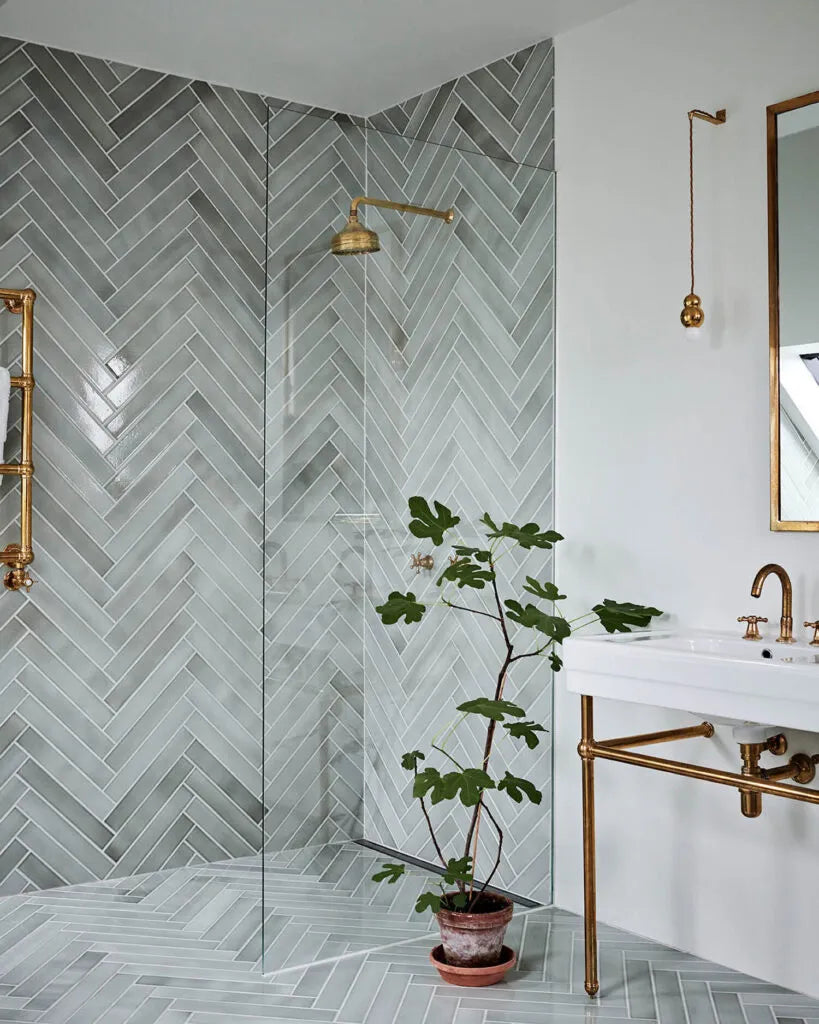
Shower floor tiles have a harder job than any other surface in the bathroom. They sit on a slope, they are wet and soapy every day, they are walked on barefoot, and they have to stay sealed for years. Choose well and nobody ever thinks about them again. Choose badly and you get a floor that is slippery, or one that cracks along the fall, or grout that goes grey within a season.
This guide covers what to actually use on a shower floor: the slip rating to ask for, why tile size matters more than most people expect, how each material behaves in a wet area, and the grout and drainage decisions that make or break the result.
The short answer
For most South African showers, the reliable choice is a small-format unglazed or textured porcelain, or a mosaic, with a declared slip rating suitable for barefoot wet areas. Small formats conform to the fall of the floor, and the extra grout lines give your feet something to grip.
Two things to avoid: polished porcelain and polished natural stone. Both look superb on a dry floor and both become genuinely dangerous wet.
Slip resistance: the number that actually matters
Slip rating is the one specification worth insisting on, and it is the one most often left off a showroom price ticket. Tiles are rated by ramp testing, and there are two scales you will come across.
R-ratings (R9 to R13)
The R scale comes from a ramp test performed with footwear, and it runs from R9 (lowest grip) through to R13 (highest). It is the rating most commonly quoted in South Africa. R9 is a dry-area rating and has no place on a shower floor. R10 is a sensible working minimum for a domestic shower, and R11 upward is worth having if the shower is used by children or older family members.
Barefoot classes (A, B and C)
Because nobody showers in shoes, there is a second ramp test done barefoot on a wet surface, which produces classes A, B and C. Class A suits dry barefoot areas, class B is the usual specification for domestic showers and changing areas, and class C is for the wettest commercial situations such as pool surrounds. If a supplier can give you a barefoot class, that is the more relevant figure for a shower floor than the R rating.
What to ask for
Ask for the tile's technical data sheet rather than a verbal assurance. Slip ratings are declared by the manufacturer per product and per finish — the same tile body in a polished and a textured finish will have very different numbers. If a rating cannot be produced for the specific finish you are buying, treat that as an answer in itself.
One practical caveat worth knowing: ramp ratings are laboratory figures. A well-rated tile that is never cleaned properly, or that has a soap film on it, will not perform the way the number suggests.
Tile size: why small format usually wins
A shower floor is not flat. It has to fall towards the waste, and a rigid tile cannot follow a slope it is bigger than.
With a traditional centre waste, the floor falls from four directions towards a single point. That is a compound slope, and only a small tile or a mosaic sheet can sit flat on it. Trying to lay a large-format tile over a four-way fall leaves you with lippage, hollow spots and a floor that ponds.
A linear channel drain against one wall changes the maths. Because the floor then falls in one direction only, it is a single plane, and a larger tile can sit on it perfectly happily. This is how you get the seamless look of a large-format floor running straight into the shower. If that is the result you want, the drainage decision has to be made first — see our guide to shower traps and shower channels, and browse shower channels and traps.
There is a second reason small formats suit showers: grout lines add grip. A mosaic floor has many times the grout length of a large tile over the same area, and that texture is doing real work underfoot. For more on format generally, our guide to choosing the right tile size and shape is a useful companion.
Material by material
Porcelain
Porcelain is the default for good reason. It is fired dense enough that its water absorption sits below 0.5%, which is what you want in a permanently wet area — it does not take up water, so it does not harbour problems behind the surface. It is hard-wearing, dimensionally stable and available in almost any look.
The caution is finish, not material. Polished porcelain has a markedly lower coefficient of friction than a textured or matt finish and should not go on a shower floor. Specify a textured, structured or matt surface with a declared rating. If you are weighing porcelain against ceramic more generally, our ceramic vs porcelain comparison covers the differences.
Mosaics
Mosaics remain the safest and most forgiving shower floor option. They come on mesh-backed sheets that can be cut and shaped around a waste, they conform to a compound fall without complaint, and the grout density gives excellent grip. They are also where you can have some fun — a mosaic floor is small enough in area that a bolder colour or finish works without overwhelming the room.
Browse the mosaic tiles range. Pebble and hexagon-style mosaics both perform well underfoot; our article on herringbone layouts shows how pattern can lift a small floor area.
Natural stone and marble
Stone brings a depth of character that no printed tile quite matches, and it is a legitimate choice for a shower floor — with conditions. Natural stone is porous, so it must be sealed on installation and resealed periodically. Honed or textured finishes are essential; polished marble on a shower floor is a slip hazard and will also etch where it meets acidic cleaning products.
If you want the look with less maintenance, a stone-effect porcelain gives you the appearance without the sealing regime. See the stone tiles and marble tiles ranges.
Concrete, cement-look and terrazzo
Cement-look surfaces suit a pared-back, contemporary shower and hide water spotting well. Concrete-look tiles in a textured finish work nicely as a floor, and terrazzo gives you fleck and movement that disguises everyday marks — a genuinely practical quality in a shower.
Décor and feature tiles
A shower floor is a small, contained area, which makes it the ideal place to use a patterned tile you would not commit to across a whole room. A patterned floor under plain walls anchors the shower without the room becoming busy. Just apply the same rule as everywhere else: check the finish and the slip rating before you fall for the pattern. See décor tiles and the smaller-format kit kat tiles.
What not to use
- Polished porcelain or polished stone. Slippery wet, regardless of how good the tile is otherwise.
- Large-format rigid tile over a four-way fall. It cannot follow the slope, and you will see it in the finished floor.
- Wood-look planks on the shower floor itself. They are excellent on the surrounding bathroom floor — see wood-look tiles — but the format is wrong for a compound fall.
Grout and waterproofing
The tile is only half the floor. Grout fills the joints and forms a water-resistant seal, and on a shower floor it takes more abuse than anywhere else in the house.
Two practical points. First, use a grout suited to constant wetting — epoxy and modern polymer-modified grouts hold colour and resist staining far better than a basic cementitious mix, which matters a great deal on a floor with as many joints as a mosaic. Second, choose a mid-tone grout colour. Brilliant white shows every mark and a very dark grout shows soap scum and limescale; something in between stays looking right for years.
Most importantly: grout is not waterproofing. The waterproof membrane sits under the tile bed, and it is what actually keeps water out of the structure. Skimping there is the single most expensive mistake in a shower build, because putting it right means taking the floor up again.
Matching the floor to the walls
You have two workable approaches, and both look deliberate.
- Continuous: the same tile or the same tone on floor and walls, so the shower reads as one volume. This makes a small shower feel larger. You will still need a different finish on the floor for grip — many ranges offer a matching textured floor tile for exactly this reason.
- Contrasting: plain wall tiles with a patterned or darker floor. The floor becomes a deliberate feature and the walls stay quiet.
What tends not to work is two competing patterns, or a floor and wall that are close in tone but not matched — near-misses read as a mistake. The wider bathroom tiles and full tile ranges make it easy to pull a coordinated floor and wall selection from the same family.
Drainage, trays and falls
If you would rather not tile the shower floor at all, a shower tray gives you a factory-formed fall and a guaranteed waterproof base, which removes most of the risk from the job. Our guide to shower trays in South Africa covers sizes and materials.
If you are tiling, the fall is what makes the floor work. A shower floor needs a consistent gradient to the outlet so that water clears rather than sits — standing water is the source of most shower floor problems, from staining to mould in the joints. Get the fall set before the tiles are chosen, not after.
Keeping a shower floor looking new
A squeegee or a quick rinse after use removes the soap film that dulls the tile and makes even a well-rated floor slippery. Avoid acidic cleaners on stone and on cementitious grout. For porcelain that has gone dull or grout that has discoloured, our guide to deep cleaning porcelain tiles covers what actually works.
Shower floor tile questions we get asked most
What type of tile is best for a shower floor?
Small-format textured porcelain or a mosaic, with a declared slip rating appropriate to barefoot wet use. Porcelain gives you the low water absorption and durability; the small format lets the floor follow the fall and adds grip through the grout lines.
Can I use large tiles on a shower floor?
Only if the floor falls in one direction, which in practice means a linear channel drain along one wall. Over a traditional four-way fall to a centre waste, a large rigid tile cannot sit flat and the floor will pond.
What slip rating do I need for a shower floor?
R10 is a reasonable minimum for a domestic shower, R11 or better if children or elderly family members use it. If your supplier can quote a barefoot class, class B is the usual domestic specification. Always ask for the figure for the exact finish you are buying.
Are mosaic tiles still a good choice?
Yes — they remain the most practical shower floor tile there is. They conform to compound falls, cut easily around a waste, and their grout density gives real grip. Their reputation for being hard to clean is mostly a grout-specification problem, not a mosaic problem.
Should the shower floor match the bathroom floor?
It can, and a continuous floor makes a small bathroom feel larger — see our ideas for making a small bathroom work harder. Just specify the textured version of the tile inside the shower. Matching appearance with a different slip finish is standard practice, not a compromise.
Is natural stone a bad idea in a shower?
Not bad, but higher maintenance. It must be sealed and resealed, must be honed or textured rather than polished, and does not tolerate acidic cleaners. If that regime does not appeal, stone-effect porcelain gets you the look with none of the upkeep.
Choosing your shower floor tiles
Bella Bathrooms has spent over 15 years helping South African homeowners specify bathrooms that still look right a decade later — and shower floors are where that experience earns its keep. Bring your drainage layout and shower dimensions and our team will help you match a floor tile, a wall tile and a grout that work together, with the slip rating checked before you buy rather than after.
Browse the full tile range, or get in touch and we will help you narrow it down.