Bath Tubs in South Africa: Types, Materials and How to Choose the Right One
A bath tub is one of the few bathroom fixtures you commit to for a decade or more. Get the size, material and style right and it becomes the calmest place in your home. Get them wrong and you end up with a fixture that is awkward to use, expensive to replace, and quietly disappointing every day. This guide walks through the practical decisions South African homeowners face when choosing a bath tub: the main types, what each material costs and how it performs, and how to match a tub to the bathroom you actually have.
The Main Types of Bath Tub
Bath tubs broadly fall into four categories, each suited to a different layout, budget and design intent.
Freestanding Bath Tubs
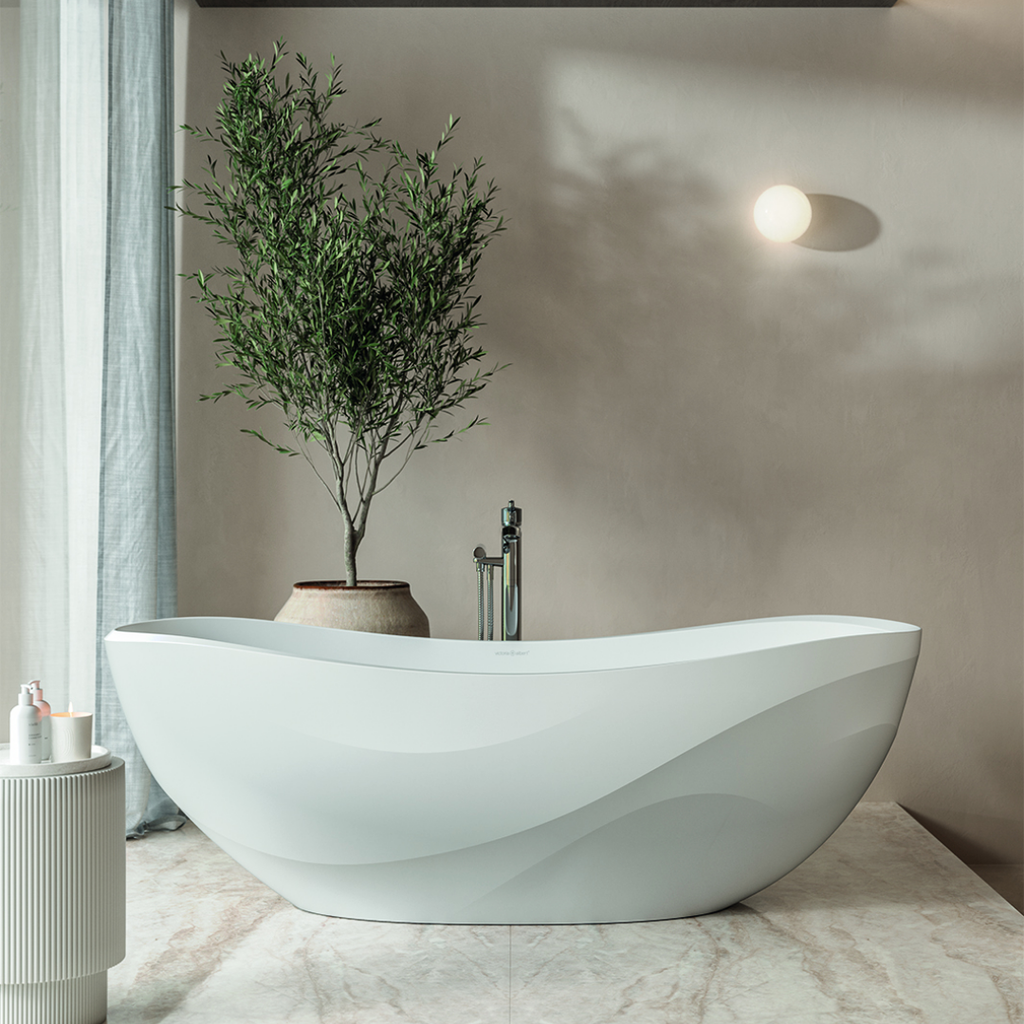
A freestanding bath tub sits on the floor as a standalone object, unattached to walls. It is the most flexible choice for placement: against a feature wall, beneath a window, or floating in the middle of an open en-suite. Because the silhouette is exposed on all sides, freestanding designs work hard visually and usually become the centrepiece of the room.
Our freestanding baths collection includes nearly 300 designs in composite stone, engineered quartz and Quarrycast volcanic limestone. Sizes range from 1100mm compact soakers up to 1800mm statement tubs. For smaller en-suites, browse our small freestanding baths collection, curated specifically for South African homes with bathrooms under 4m².
Built-In Bath Tubs
A built-in bath tub is installed against one or more walls and finished with tiled or panelled aprons. It is the most space-efficient option and remains the default in most South African renovations, particularly where a shower is mounted over the bath. Built-ins are typically acrylic, which keeps the price down without sacrificing comfort.
Browse our built-in baths range for sizes from 1500mm to 1800mm. Most accept a shower screen or curtain rail, making them the practical choice for family bathrooms and guest en-suites.
Corner Bath Tubs
A corner bath tub fits into a 90-degree corner, freeing up the rest of the floor for a vanity, shower enclosure or open circulation. They are particularly useful in awkwardly proportioned rooms where a long built-in bath would dominate the space. Most corner designs are double-ended, allowing two people to use the bath at once.
See our corner baths collection for angular and softly curved options across a range of acrylic and composite finishes.
Shower-Bath Combinations
A shower-bath combination, sometimes called a P-shape or L-shape bath, is a built-in design with one widened end that accommodates standing room for showering. They are popular in single-bathroom homes where every fixture has to multi-task. You get the soaking depth of a bath and the practicality of a daily shower in a single footprint.
Bath Tub Materials and What They Cost
Material is the single biggest influence on a bath tub's price, weight, heat retention and the way it feels to use. Here is how the main options compare on the South African market.
Acrylic
Acrylic is the most common bath tub material. It is a reinforced thermoplastic that is lightweight, warm to the touch and easy to repair if it scratches. Acrylic baths are the most affordable, typically starting around R3,000 for a basic built-in and ranging from R12,000 to R25,000 for a freestanding design. Heat retention is moderate and colour options are usually limited to gloss white. Acrylic is the default for built-ins, shower-baths and entry-level freestanding tubs.
Composite Stone and Engineered Quartz
Composite stone (used by Livingstone) and engineered quartz (used by Dado Creations) are blends of crushed mineral and resin. The result is a surface that is dense, warm to the touch and highly resistant to chips and UV yellowing. Walls are thicker than acrylic, so heat retention is excellent and your bath stays warmer for longer. Pricing typically runs from R25,000 to R55,000 for a freestanding design, depending on size and finish. Available finishes include polished white, matt white, matt black, concrete grey and two-tone combinations.
Our Dado freestanding baths collection has over 90 designs, and the Livingstone range is locally manufactured in South Africa for shorter lead times and easier servicing.
Quarrycast Volcanic Limestone
Quarrycast is the proprietary material used by British brand Victoria + Albert. It is a blend of volcanic limestone and resin that produces a surface noticeably warmer and more tactile than acrylic, with exceptional heat retention. The trade-off is weight: a Quarrycast bath can weigh over 100kg empty. Pricing typically runs from R20,000 to R50,000 plus. Best suited to ground-floor installations or upstairs bathrooms where the slab can take the load. View the full Victoria + Albert range for British-designed sculptural pieces.
Cast Iron and Steel
Traditional cast iron and porcelain-enamelled steel baths are still produced but less commonly specified in new builds. They are heavy, retain heat well and last almost indefinitely, but the price and installation complexity push most buyers towards composite or Quarrycast alternatives. The Wikipedia bathtub overview covers the material history if you are curious about how the modern bath tub evolved.
How to Choose the Right Bath Tub
Three practical questions cut through most of the noise.
How Much Space Do You Have?
Measure the available footprint before you fall in love with a design. A standard freestanding bath needs at least 200mm of clearance on each side for cleaning access and a fitted floor-mounted mixer. A built-in bath needs only the apron face exposed. For rooms under 4m², a 1500mm small freestanding bath or a 1700mm built-in are usually the right answer.
Will You Shower in It?
If yes, choose a built-in bath or a shower-bath combination. Freestanding baths can technically take a wall-mounted shower head, but the splash arc rarely works neatly and water tends to escape onto the floor. Built-ins with a shower screen contain the spray properly.
What Is Your Budget for Tap Ware?
A freestanding bath needs a freestanding floor-mounted mixer, which adds R8,000 to R20,000 to the total. Built-ins use cheaper deck-mounted or wall-mounted bath taps. Browse our bathroom bath taps collection alongside the bath itself so the two are specified together. For a deeper look at tap styles, finishes and what to expect at each price point, see our bathroom taps buying guide.
A Realistic Bath Tub Price Range in South Africa
The market spans a wide range. As a rough guide:
- Entry-level acrylic built-in: R3,000 to R8,000
- Mid-range acrylic freestanding: R12,000 to R25,000
- Corner bath, acrylic: R8,000 to R18,000
- Composite stone freestanding: R25,000 to R55,000
- Quarrycast (Victoria + Albert): R25,000 to R50,000+
- Cast iron: R30,000 to R70,000
These are bath-only prices. Add installation (typically R3,500 to R8,000), tap ware and any wall finishing into the total project cost. A well-specified bath tub installation usually represents 10 to 15 percent of a full bathroom renovation budget.
Visit Our Kramerville Showroom
Choosing a bath tub from a photograph alone is hard. The weight, depth and warmth of the material only become obvious in person. Visit our Kramerville showroom in Johannesburg to compare freestanding, built-in and corner designs side by side, and to test the comfort of the major brands we stock. Our team can advise on weight loading, plumbing access, waste positioning and the practical details that turn a good bath into a great one.
Browse the full freestanding bath collection or contact our team to discuss your bathroom project.
-
Posted in
bath tub, bathroom guide, bathtub, built-in bath, corner bath, freestanding bath