Marble Tiles in South Africa: Real Marble, Marble Look and How to Choose the Right Ones
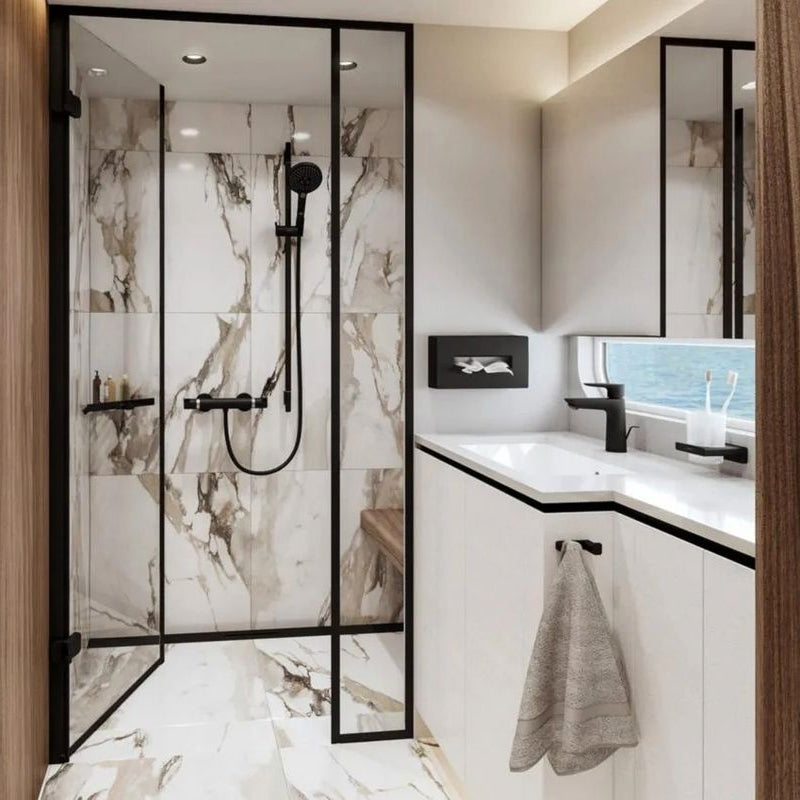
Marble tiles have been a sign of a beautifully finished bathroom for centuries, and the appeal is easy to understand. No two pieces of stone are alike, and the veining brings movement to a room without the need for a busy pattern. In South Africa, though, the words "marble tiles" now cover two quite different products: natural marble, and porcelain tiles made to look like it. They can look remarkably similar on a wall, but they behave differently in a wet room and need very different levels of care.
This guide explains how to tell which one suits your project, then covers finishes, sizes, colours, the best places to use them and what they cost. You can follow along with our full range of marble tiles as you read.
Real Marble or Marble Look: What Is the Difference?
Real marble tiles
Marble is a metamorphic rock made mainly of carbonate minerals, and its veins and swirls come from natural impurities such as clay, silt and sand. That is why every piece is unique. It also explains marble's weak point. The calcium carbonate in the stone reacts with acids, so lemon juice, vinegar and many descalers can leave dull marks. Marble is more porous than porcelain too, so it needs to be sealed.
In our range, real marble comes as mosaic sheets. The Salt Rock family uses marble and natural stone chips in bar, bit and stripe patterns, with Marquina in black and Musk, Namaste and Peppermint in soft greys and beiges. Choosing real stone for a smaller area, such as a shower niche or the wall behind a vanity, puts the genuine material where you will see and touch it most. Our guide to mosaic tiles covers sheet sizes, layouts and installation in more detail.
Marble look tiles
Marble look tiles are usually porcelain, a dense ceramic that absorbs less than 0.5 per cent water. They do not need the regular sealing that natural marble does, they cope well with everyday spills, and they suit hard-working floors as well as walls. They are also far more affordable across a large area.
The trade-off is that the pattern is manufactured, so it will repeat at some point. Ask to see several tiles laid out side by side before you order, and have your tiler mix tiles from different boxes so that matching pieces do not end up next to each other. Remember as well that on a porcelain tile, names such as Carrara, Calacatta and Statuario describe the look, not the origin of the stone.
Marble Tile Finishes: Polished, Matt or Satin
- Polished. A polished surface reflects light and gives the veining the most depth, as on our Venatino, Santorini White and Calacatta Aurora tiles. It is at its best on walls and on floors that stay dry.
- Matt. A matt finish looks softer and more contemporary, shows fewer water marks and gives better grip than a polished tile. Milan White, Armani Silver and Prada Sky are good examples.
- Satin and lappato. These sit between the two, with a gentle sheen rather than a full shine. Marmo Decorista and Armani Astoria have a satin finish, while many of our slabs are lappato, meaning semi-polished.
- Slip-resistant. For floors that get wet, look for a textured surface. Stone Crete has a marble look with a rough, slip-resistant finish.
Marble Tile Sizes
Size changes how convincing a marble look is, because larger tiles show more of the veining before the eye meets a grout line.
- 600 x 600 mm and 800 x 800 mm. Square formats that are easy to set out in a smaller bathroom or guest toilet.
- 600 x 1200 mm. The most common size in our range, usually 10 mm thick. It works on floors and walls and keeps grout lines to a minimum.
- 750 x 1497 mm. A generous format for larger bathrooms and open-plan spaces, available in full body porcelain.
- Slabs up to 1620 x 3240 mm. Our large format slabs come closest to the effect of a single sheet of stone. A full-size slab covers just over 5 square metres, in a thickness of 6.5 mm or 12 mm.
The bigger the tile, the flatter the surface behind it needs to be. Slabs in particular should be handled and fitted by a team with the right equipment, so speak to your installer before you commit.
Where to Use Marble Tiles
Marble bathroom tiles for walls
Walls are the easiest place to use marble, because they carry no foot traffic. A single veined wall behind a freestanding bath or a floating vanity is often enough. Keep the remaining walls calm with plain bathroom tiles in a shade picked out of the veining, and the marble will look deliberate rather than overwhelming. In the shower, porcelain is the low-maintenance choice, with real marble best kept to a niche or feature band.
Marble floor tiles
For floors, choose the finish before the colour. Polished tiles can be slippery when wet, so keep them for bedrooms, living areas and the dry side of a bathroom, and use a matt or slip-resistant tile near the bath and shower. Only some of our marble mosaics are listed for floors, so check with us before ordering one for a shower base. For a patio, choose a slip-rated porcelain made for outdoor use instead of a polished marble tile.
Marble kitchen tiles
Kitchens are full of the things marble dislikes, including citrus, wine, vinegar and tomato. If you love the look behind a hob or sink, a marble look porcelain tile or slab gives you the veining without the worry. If you prefer real marble, seal it well, wipe up spills quickly and accept that a little patina is part of its charm.
White, Grey and Black Marble Tiles
White marble tiles are the classic choice. Carrara looks tend to have soft grey veining, while Calacatta looks are bolder, often with touches of gold. Both brighten a small bathroom and work with chrome, brass or black fittings. Grey marble tiles are calmer and more forgiving on floors, and pair well with timber vanities. Black marble tiles, such as Marquina mosaics or the satin Marmo Decorista, make a dramatic feature and are best balanced with plenty of white.
For a closer look at individual stones and the mood each one creates, read our guide to marble colours for a classic bathroom. If you like natural texture but find strong veining too busy, compare our stone look stone tiles.
What Do Marble Tiles Cost?
These are typical ranges from our own store at the time of writing (November 2026). Follow the collection links for current prices.
| Type | Typical price |
|---|---|
| Marble look porcelain, 600 x 600 mm to 600 x 1200 mm | From around R275 to R345 per square metre |
| Premium marble look tiles, 600 x 1200 mm | Around R640 to R890 per square metre |
| Full body porcelain, 750 x 1497 mm | Around R1,540 per square metre |
| Calacatta and Statuario look porcelain slabs | Around R17,800 to R25,300 per slab |
| Real marble mosaic sheets | Around R225 to R350 per sheet, or roughly R2,500 to R3,800 per square metre |
Most tiles are sold by the box, and our product pages show the price per box and per square metre. To work out what you need, multiply the width by the height of each area and add 10 per cent for cuts and breakages. A wall 2.4 m wide and 2.4 m high is 5.76 square metres, or about 6.3 with the extra, which means three boxes of a tile packed at 2.16 square metres per box. Order everything together so that the tiles come from the same batch.
How to Look After Marble Tiles
- Clean gently. The Natural Stone Institute recommends a neutral cleaner, stone soap or mild dishwashing liquid with warm water, and warns that products containing lemon, vinegar or other acids may dull or etch stones such as marble.
- Seal real marble. Sealing makes the stone more stain resistant, but not stain proof. Seal it when it is installed and reapply as the product instructions advise.
- Wipe up spills. Toothpaste, cosmetics and hair products can all mark real marble if they are left to sit.
- Keep porcelain simple. Marble look porcelain needs little more than warm water and a mild cleaner. Rinse well so that no film dulls a polished surface.
Find the Right Marble Tiles for Your Home
Start with how the space will be used. Choose marble look porcelain for floors, showers and busy kitchens, and real marble mosaic where a small area of natural stone will make the biggest impression. Then settle the finish, go as large as the room allows and let one veined surface take the lead.
Browse our marble tiles online, or visit our Kramerville showroom to compare the veining and finishes in person. If you would like help choosing tiles or working out quantities, contact our team and we will help you plan your project.
-
Posted in
buying guide, marble bathroom tiles, marble floor tiles, marble look tiles, marble tiles, porcelain tiles