Towel Rails in South Africa: Types, Sizes and How to Choose the Right One
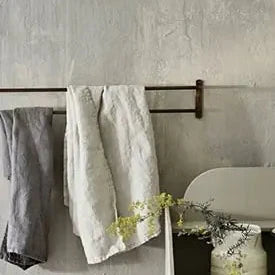
A towel rail is one of those bathroom fittings nobody thinks about until they are standing on a cold tile floor holding a damp towel. It is a small purchase next to a bath or a vanity, but it shapes how the room works every morning. Get the length, height and finish right and the bathroom feels finished. Get it wrong and you end up with towels draped over the shower door for the next decade.
This guide covers the main types of towel rail available in South Africa, how to size one properly, which finishes survive a humid bathroom, and what to check before you drill into a tiled wall.
The Main Types of Towel Rail
Most bathrooms use one of four formats, and plenty combine two or three of them.
Single Towel Rails
A single horizontal bar mounted to the wall. It is the default for a reason: it is unobtrusive, inexpensive and dries a towel properly because the towel hangs flat with air on both sides. It suits a guest bathroom, a cloakroom, or any space where one or two towels hang. Browse the full range of bathroom towel rails to see how much variation exists within what sounds like a very simple product.
Double Towel Rails
Two parallel bars on the same set of brackets, doubling the hanging capacity without doubling the wall space. This is the workhorse of the family bathroom and the most common upgrade people make when a single rail stops coping. The trade-off is depth: a double rail projects further from the wall, so it is worth measuring the walkway before committing in a narrow room. Our double towel rail range covers the usual lengths and finishes.
Towel Rings, Hooks and Racks
Rings are for hand towels beside a basin, not bath sheets, and keep a small towel within reach of the vanity. Hooks are the most space efficient option and the most forgiving, because nobody has to fold anything to use them correctly, which matters in a house with children. Look at towel rings and robe hooks for the smaller formats, or the bathroom and shower towel racks collection for multi-bar and shelf-topped units that hold a full set of towels in one place.
Heated Towel Rails
A heated towel rail warms the bars themselves, so towels dry between uses rather than staying damp. The real benefit is usually not luxury but damp control: a towel that dries properly does not develop that musty smell, and the room holds less moisture. Our heated rails collection is by some distance the largest towel rail range we stock.
Heated Towel Rails: Electric, Hydronic or Both
There are two ways to heat a towel rail, and the distinction matters because it determines who installs it.
An electric heated towel rail contains a heating element that warms fluid sealed inside the unit. It runs off your electrical supply, needs no plumbing, and can be fitted to almost any wall with a suitable connection point. This is the practical choice for most South African homes and for any retrofit, because it does not depend on a central heating system.
A hydronic rail is plumbed like a radiator and circulates water heated by a central boiler. As Wikipedia's overview of towel warmers explains, some units combine both, running on hot water in winter and electricity in summer. Hydronic setups are far more common in the northern hemisphere, where homes are built around central heating, than they are here, so electric is the sensible default for most South African bathrooms. The Bathroom Butler heated towel rails range is a good starting point.
On running costs: heated rails draw relatively little power compared with a geyser, but they are often left on continuously, which is where the expense creeps in. A timer lets you run the rail morning and evening rather than around the clock, and it is the most useful accessory you can add.
Getting the Size Right
Towel rail length is the specification people most often get wrong. The rule of thumb is straightforward: the rail should be at least as wide as the folded towel it needs to hold, with a little room to spare.
- Hand towels need very little rail. A ring or short rail is usually enough.
- Standard bath towels want a rail wide enough to hang the towel folded in half without the edges bunching against the brackets. The recommended length is usually 600mm.
- Bath sheets are wider and heavier, and this is where a rail that looked generous in the showroom turns out too short at home. The recommended length is usually 800mm.
Measure your actual towels before you shop rather than assuming a standard, because sizes vary a great deal between brands. Height matters too: a rail mounted too low lets a bath sheet trail on the floor, and one too high is awkward for a child. Roughly chest height on an adult works for most installations, adjusted so the longest towel clears the skirting.
Choosing a Finish That Lasts
A bathroom is a demanding environment: warm, humid, and regularly splashed. Finish is not only an aesthetic decision.
Chrome remains the most widely specified finish. It is hard wearing, easy to clean and pairs with almost any tapware. Matt black has been the dominant trend finish for years and still looks current, though it shows water spotting more readily in hard water areas. Brushed nickel and brushed stainless sit between the two, hiding marks better than either chrome or black. Brass, bronze and gunmetal suit heritage and more decorative schemes.
The principle is coordination rather than perfect matching. Your towel rail sits in the same visual field as your taps, mirror frame and shower fittings, and picking finishes from within one family reads as deliberate. For a wider view of how the smaller fittings work together, our guide to choosing bathroom accessories covers the whole set, and the broader bathroom accessories collection lets you see finishes side by side.
Where to Position a Towel Rail
Position is about the walk, not the wall. The towel needs to be reachable from the shower or bath without stepping across the room dripping water.
- Keep the rail out of the shower's direct spray, but within arm's reach of the opening.
- Do not mount a rail where a door will swing into it.
- Leave clearance from the basin so a hanging towel does not sit in the splash zone.
In tight bathrooms, ladder-style rails and multi-bar racks earn their place, holding several towels in the footprint of one rail. If storage generally is the constraint, look at bathroom storage units alongside the rail rather than asking the rail to do all the work.
Installation and Safety
A standard non-heated towel rail is straightforward to fit, but a wet bath sheet is heavy and a rail gets pulled on, so fix into a solid substrate with the correct fixings for your wall type. Drilling tiles requires the right bit and a slow start to stop the drill wandering across the glaze.
Heated rails are a different matter. Electrical work in a bathroom must be carried out by a qualified, registered electrician and signed off appropriately. Bathrooms are zoned for electrical safety according to proximity to water, and fittings are rated using the IP system. The IP Code uses two digits, the first for protection against solid objects and the second for protection against water ingress, so a higher second digit means better protection against moisture. Your electrician will confirm the appropriate rating and position. This is not a DIY job.
One related point: a towel rail dries towels but cannot fix a fundamentally damp room. If your bathroom mists up badly or shows mould at the ceiling, ventilation is the underlying issue. Our guide to choosing a bathroom extractor fan deals with that side of the problem.
Common Mistakes to Avoid
- Buying too short. The most frequent regret. Measure your largest towel first.
- Too few bars. Two adults sharing a single rail means one permanently damp towel.
- Ignoring projection. A double rail in a narrow bathroom becomes something you catch your hip on.
- Mixing finishes at random. A chrome rail next to matt black taps looks like an oversight rather than a choice.
- Treating a heated rail as the room's only heat source. It warms towels, it does not heat a bathroom.
Find the Right Towel Rail for Your Bathroom
A towel rail is a modest fitting that quietly determines whether a bathroom works day to day. Measure your towels, count the people using the room, decide whether heated is worth it, and match the finish to the fittings already in the space.
Browse the full bathroom towel rails range, compare the heated rails options, or explore Blutide towel rails for a coordinated look. If you would rather talk it through, the team at Bella Bathrooms can help you match a rail to your layout and your fittings. Visit us in store or get in touch, and we will help you get it right first time.
-
Posted in
bathroom accessories, buying guide, heated towel rails, towel rails