Toilets in South Africa: Types, Styles and How to Choose the Right One
A toilet is the hardest-working fixture in any bathroom, yet it is often the last thing homeowners think about when planning a renovation. Get the choice right and you gain a fixture that flushes cleanly, saves water and disappears quietly into a considered design. Get it wrong and you are left with a cramped layout, an awkward flush or a pan that dates the whole room. With so many toilets on the market in South Africa, from compact close-coupled suites to sleek wall-hung pans, knowing how the main types differ is the first step to choosing well.
This guide walks through the main types of toilets available, explains the concealed systems that sit behind the wall, and covers the practical points that matter most when you are buying: water efficiency, hygiene, sizing and brand.
The Main Types of Toilets
Most residential toilets fall into three families. Each suits a different layout, budget and look, so it is worth understanding what sets them apart before you commit.
Close-Coupled Toilets
The close-coupled toilet is the most common design in South African homes, and for good reason. The cistern sits directly on top of the bowl as a single connected unit, so installation is straightforward and every working part stays accessible. Close-coupled suites are space-saving, easy to clean and available in a wide range of styles and finishes, which makes them a dependable choice for family bathrooms, guest loos and rental properties alike. If you want a reliable toilet without the added cost of building work, this is usually where to start.
Wall-Hung Toilets
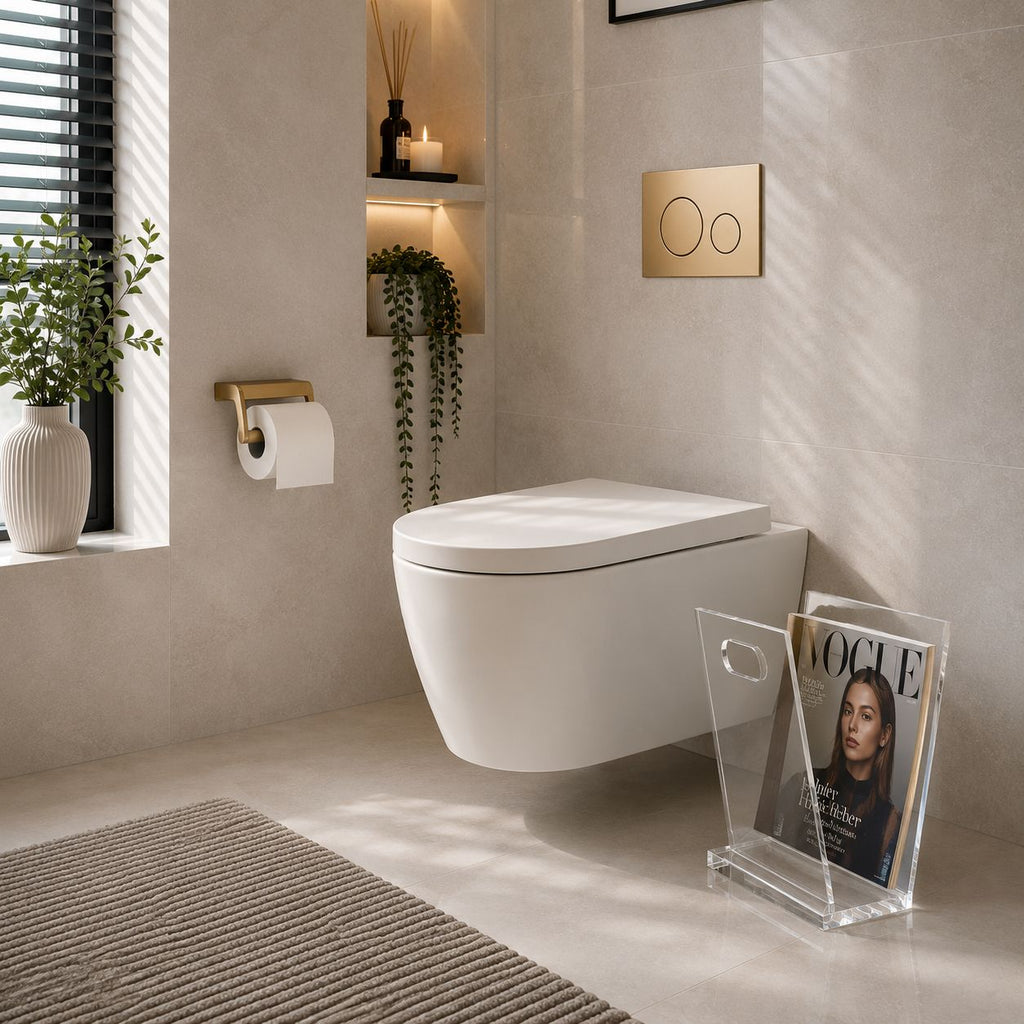
A wall-hung toilet mounts to a concealed frame and appears to float above the floor. The cistern is hidden inside the wall, so all you see is a clean pan and a slim flush plate. The effect is striking: the floor stays visible beneath the pan, which makes the whole bathroom feel larger and lighter, and cleaning underneath becomes effortless. Wall-hung pans are the go-to for modern en-suites and high-end renovations. They cost more to install because they need a supporting frame and a concealed cistern, but the pay-off is a genuinely minimalist finish that is hard to achieve any other way.
Back-to-Wall Toilets
A back-to-wall toilet sits flush against the wall or a furniture unit, concealing the pipework for a tidy, seamless look without the full building work of a wall-hung system. The pan rests on the floor while the cistern hides behind the wall or inside a cabinet. This style is a smart middle ground: it delivers much of the streamlined appearance of a wall-hung toilet with a simpler, more forgiving installation, which makes it ideal for compact bathrooms and minimalist interiors.
Concealed Cisterns and Flush Plates
Wall-hung and back-to-wall toilets rely on two hidden components that are worth understanding before you buy. The first is the concealed cistern, a steel-framed flushing unit built into the wall. Quality frames from brands such as Geberit are engineered to carry the full weight of a seated user, and the better systems come with long guarantees and decades of spare-part availability, so a hidden cistern is not something you will be chasing down the line.
The second is the flush plate, or actuator. It is the only part of a concealed system you actually see, so it doubles as a design detail. Flush plates come in mechanical, pneumatic and touchless sensor versions, and in finishes ranging from matte black and chrome to brushed stainless steel and white glass, letting you match the plate to your taps and accessories. Choosing the cistern and plate together, and confirming they are compatible with your chosen pan, is the key to a flush that is quiet, reliable and easy to service.
Rimless Flushing and Water Efficiency
Two features separate a modern toilet from an older one: rimless bowls and dual-flush controls. A rimless pan does away with the traditional hollow rim where bacteria and limescale collect, so water sweeps the entire bowl and cleaning is far simpler and more hygienic. Most premium ranges, including Duravit and Geberit, now offer rimless technology as standard.
Water efficiency matters everywhere, but it is especially important in a country as water-conscious as South Africa. A dual-flush toilet gives you two options: a smaller button for liquid waste and a larger one for solids. Modern dual-flush systems typically use around six litres for a full flush and three litres for a reduced flush, a significant saving over the older single-flush cisterns that used the same large volume every time. Over a year, in a busy household, that difference adds up on both your water bill and your environmental footprint. If you want to understand the mechanics in more detail, this overview of the flush toilet is a useful primer.
How to Choose the Right Toilet
Once you have settled on a style, a few practical checks will make sure the toilet fits your bathroom and your plumbing.
Measure Before You Buy
The most important measurement is the set-out, the distance from the finished wall to the centre of the waste outlet, along with whether your waste exits through the floor (an S-trap) or through the wall (a P-trap). Getting this wrong is the single most common cause of a toilet that will not fit, so confirm it before ordering. Also check the overall footprint of the pan against tight corners, adjacent vanities and the door swing, particularly in smaller bathrooms.
Consider the Seat and Comfort
A soft-close seat closes slowly and silently, avoids slamming and lasts longer than a standard hinge. Most quality suites either include one or offer it as an option. Comfort-height pans, which sit a little taller than a standard bowl, are worth considering for older users or anyone who finds a low seat awkward to use.
Choose a Brand That Backs Its Product
Toilets are a long-term purchase, so the brand behind the ceramic counts. Duravit brings over two centuries of German sanitaryware engineering, with rimless flushing and hygienic glazes that resist bacteria. Geberit is the European leader in behind-the-wall technology, with Swiss-engineered concealed cisterns known for their longevity and their quiet, water-saving flush. Buying from an established brand means guarantees you can rely on and spare parts you can still find years later.
Bringing the Bathroom Together
A toilet rarely sits in isolation. It shares its ceramic and finish language with the basin, so coordinating the two pays off: our guide to bathroom basins covers the shapes and mounting styles that pair naturally with a modern toilet. If you are planning a full renovation, the same principles of proportion and finish apply to your bath tub, so the whole suite reads as one considered space rather than a collection of separate parts.
Find Your Perfect Toilet at Bella Bathrooms
From space-saving close-coupled suites to floating wall-hung pans and the concealed systems that power them, the right toilet balances performance, hygiene and design. Browse the full range of toilets, bidets and urinals online, or visit our Kramerville showroom to see the options in person, compare flush plates and finishes, and enjoy a cup of our signature coffee while our team helps you specify the ideal toilet for your bathroom.